When Designs Come to Life

The experience of transforming a digital design into real, functional, everyday products.
Hoda Moustapha

1/31/20265 min read

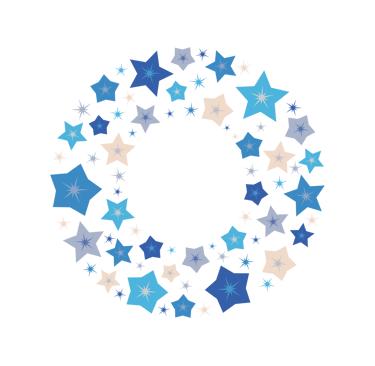
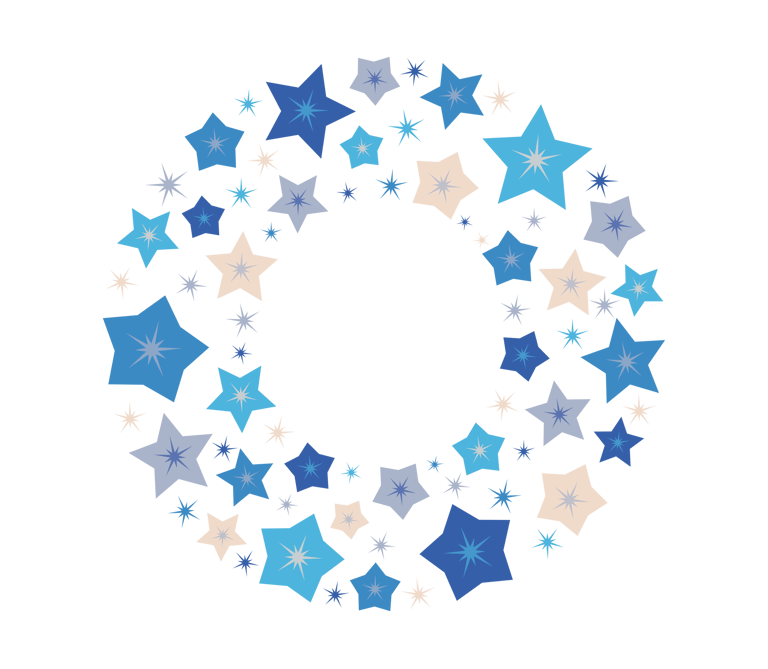
Celestial Waltz Design

1 - The moment a design takes on new identities

Designing usually begins in a contained space. Inside a design file, shapes are adjusted, colors refined, composition tested—until everything finally feels right. At that point, the design exists as one complete, clearly defined piece.

As that moment approaches, something else begins to happen. The imagination starts to move. The design is no longer seen only as an image on its own, but as something that could exist beyond the file—on different products, at different scales, in different settings. The design is still singular, yet it no longer feels limited to one form.

Celestial Waltz was the first design I published on my print-on-demand platforms, making it the starting point of this journey. As it reached completion, it no longer felt fixed. It began to behave like a flexible concept, quietly suggesting variations, placements, and possibilities — quietly taking on more than one identity.

This moment is subtle, but it matters. It is the point where a finished design stops feeling like a final outcome and starts feeling like the beginning of something that can live in many forms.
Celestial Waltz Design

2 - The exciting shift from design to products

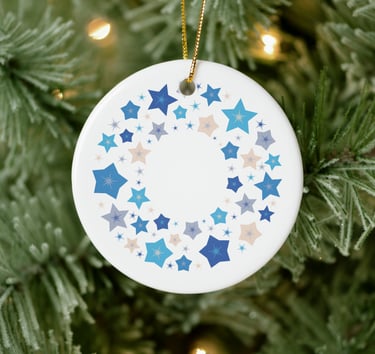
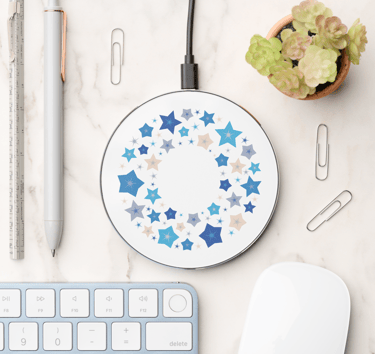
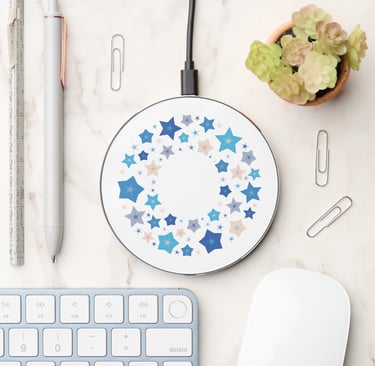
That quiet expansion in the imagination becomes visible the moment the design starts appearing on products. One by one, Celestial Waltz shows up on notebooks, desk accessories, ornaments, and everyday objects—and the shift is immediate. The design is no longer imagined in context; it is now placed there.

As more products appear, a sense of fascination sets in, accompanied by a quiet confidence. The same design repeats across formats, scales, and surfaces, and with each appearance it feels both familiar and new. There is a brief pause that comes naturally at this stage: Is this really my design on all these different products? The question carries more than surprise—it signals recognition.

Each product brings something different into focus. Scale changes how the design is read. Placement alters its rhythm. Repetition gives it structure. The core identity remains intact, and with each new variation, the design feels increasingly assured in its place.

Even though everything is still viewed online at this stage, the impact is real. This is the moment when the design proves itself—not once, but repeatedly—across contexts. What started as a single digital composition now stands confidently across a range of products.

Celestial Waltz Charger
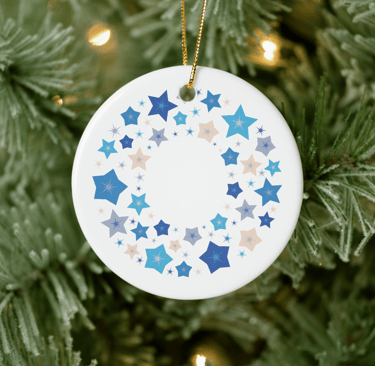
Celestial Waltz Ornament
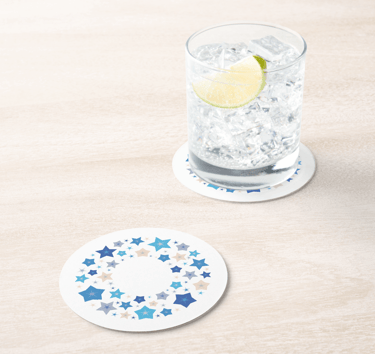
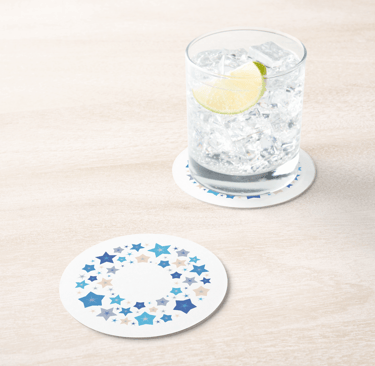
Celestial Waltz Coasters
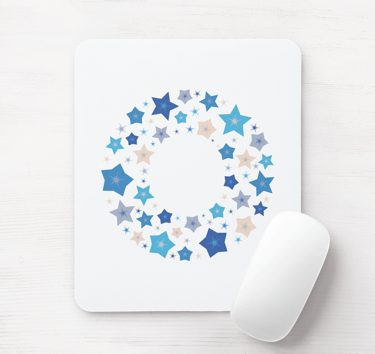
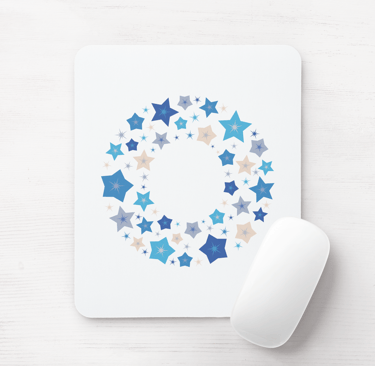
Celestial Waltz Mousepad

Celestial Waltz Charger

Celestial Waltz Coasters

Celestial Waltz Mousepad

Celestial Waltz Ornament

3 - The quiet magic of using my own design

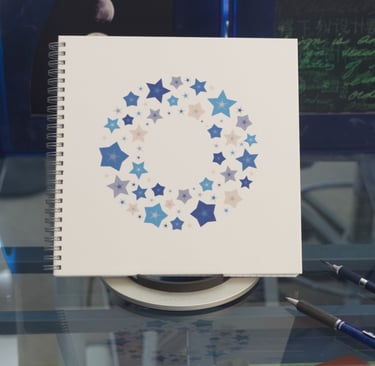
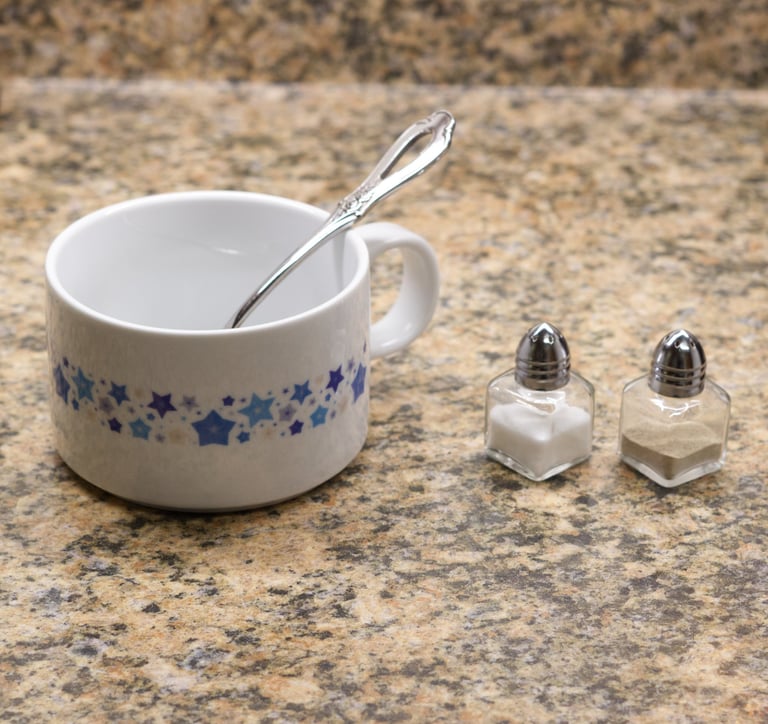
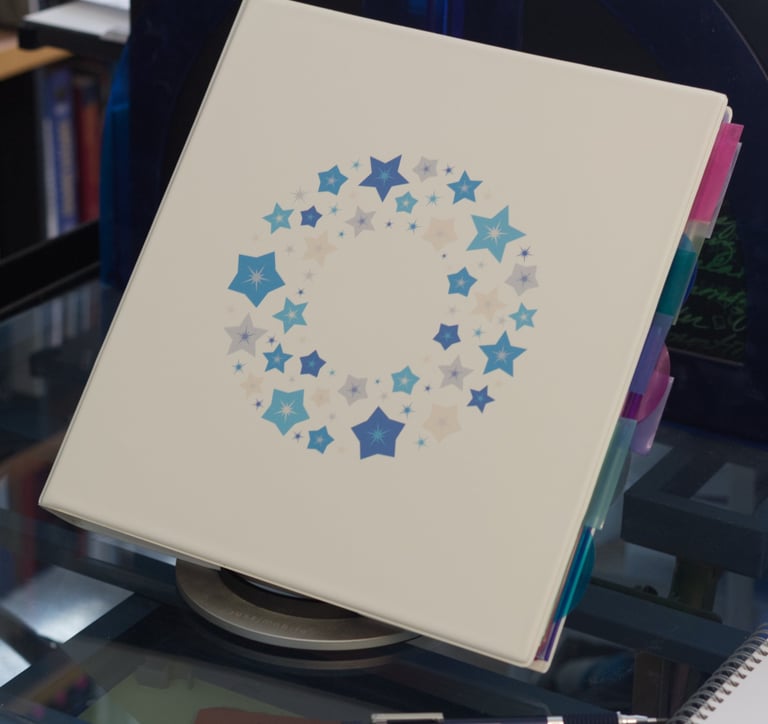
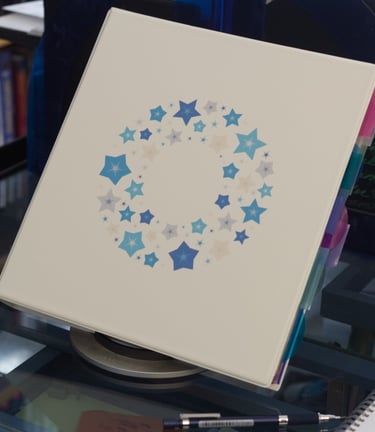
The experience changes the moment the design becomes a physical object. Holding a Celestial Waltz binder, notebook, or mug immediately introduces qualities no preview can fully convey. Weight is felt. Texture is noticed. Scale becomes real. The design no longer floats on a screen—it settles into the hands.

As these objects begin to be used, awareness deepens. A notebook is picked up and put down. A binder is opened, closed, and handled from different angles. A soup mug is held, turned, and used. The design moves naturally through these actions, no longer observed as an image but encountered as part of everyday activity.

In this moment, pride takes on a different form. It is no longer about seeing the design work, but about feeling it belong. There is a quiet recognition that comes with use: this is my design, now part of daily life. The satisfaction is subtle but unmistakable. The design has crossed from concept into presence.

Simple actions—writing a few notes, organizing documents, or holding a warm mug—make this transition tangible. What once existed as an idea is now woven into routine, carrying a sense of authorship that feels both grounding and deeply rewarding.

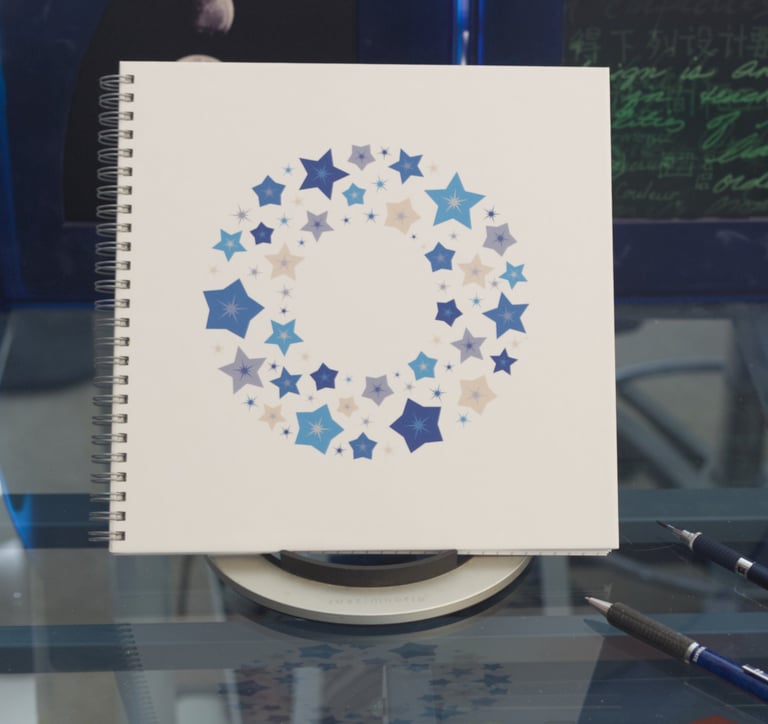
Celestial Waltz Notebook
Celestial Waltz Soup Mug
Celestial Waltz Binder

Celestial Waltz Notebook

Celestial Waltz Soup Mug

Celestial Waltz Binder

4 - The evolution of the design

The more the products are used, the more something becomes clear: a design does not simply move from one product to another unchanged. It responds. It adjusts. The same visual idea behaves differently depending on scale, surface, and purpose.

These differences are not theoretical—they become visible through use. A circular composition feels complete and centered on a notebook or binder front, while a linear arrangement feels more natural when it stretches across a mug or a wider surface. What initially looks like the same design begins to reveal distinct personalities, each shaped by how and where it is used.

At this point, design decisions shift almost instinctively. Adaptation is no longer decorative; it becomes necessary. The design starts to negotiate with the object it inhabits, finding a balance between visual identity and practical fit. This is where variation feels less like change and more like refinement.

These refinements often take the form of Artisan editions—intentional adaptations of the original design created to suit different products and uses. Seen this way, evolution is not about altering the design’s essence, but about allowing it to settle naturally into the form that suits it best.

5 — Designing for everyday life

After seeing how a design moves, adapts, and settles into real use, a larger pattern begins to emerge. These experiences reinforce a central principle behind Kiwi Art: designs are not meant to remain visual statements alone. They are meant to be lived with—handled, used, returned to, and encountered again and again in ordinary moments.

Designing for everyday life starts to feel less like a goal and more like a natural outcome. Attention shifts toward how a product is actually used: how it is held, opened, carried, or placed. Scale, comfort, durability, and context begin to matter just as much as composition and color. A design feels right when it fits effortlessly into daily routines, without asking for attention yet remaining unmistakably present.

This way of working influences both design and product choices. Instead of forcing one layout everywhere, the design is allowed to take the form that suits each object best. What holds everything together is not uniformity, but coherence—a recognizable identity that adapts without losing itself.

Over time, regular use becomes part of the creative process itself. Each interaction feeds back into future decisions, quietly shaping how designs continue to evolve, as seen through the ongoing evolution of Celestial Waltz.

6 - A journey of exploration

Following Celestial Waltz from its first digital form to real, functional products makes one thing clear: this experience is not abstract or distant. It unfolds through making, using, noticing, and responding. What begins as a single design becomes something tangible, present, and meaningful through daily interactions.

This post captures one such experience. It follows a specific design through a specific moment, without trying to define what comes next. The value lies in paying attention—allowing the process itself to reveal what matters, what works, and what feels right.

This post marks the beginning of the Kiwi Art blog. It captures one experience—how a digital design becomes a real, functional product—and sets a starting point for sharing thoughts, ideas, and observations around the creative world of Kiwi Art.